
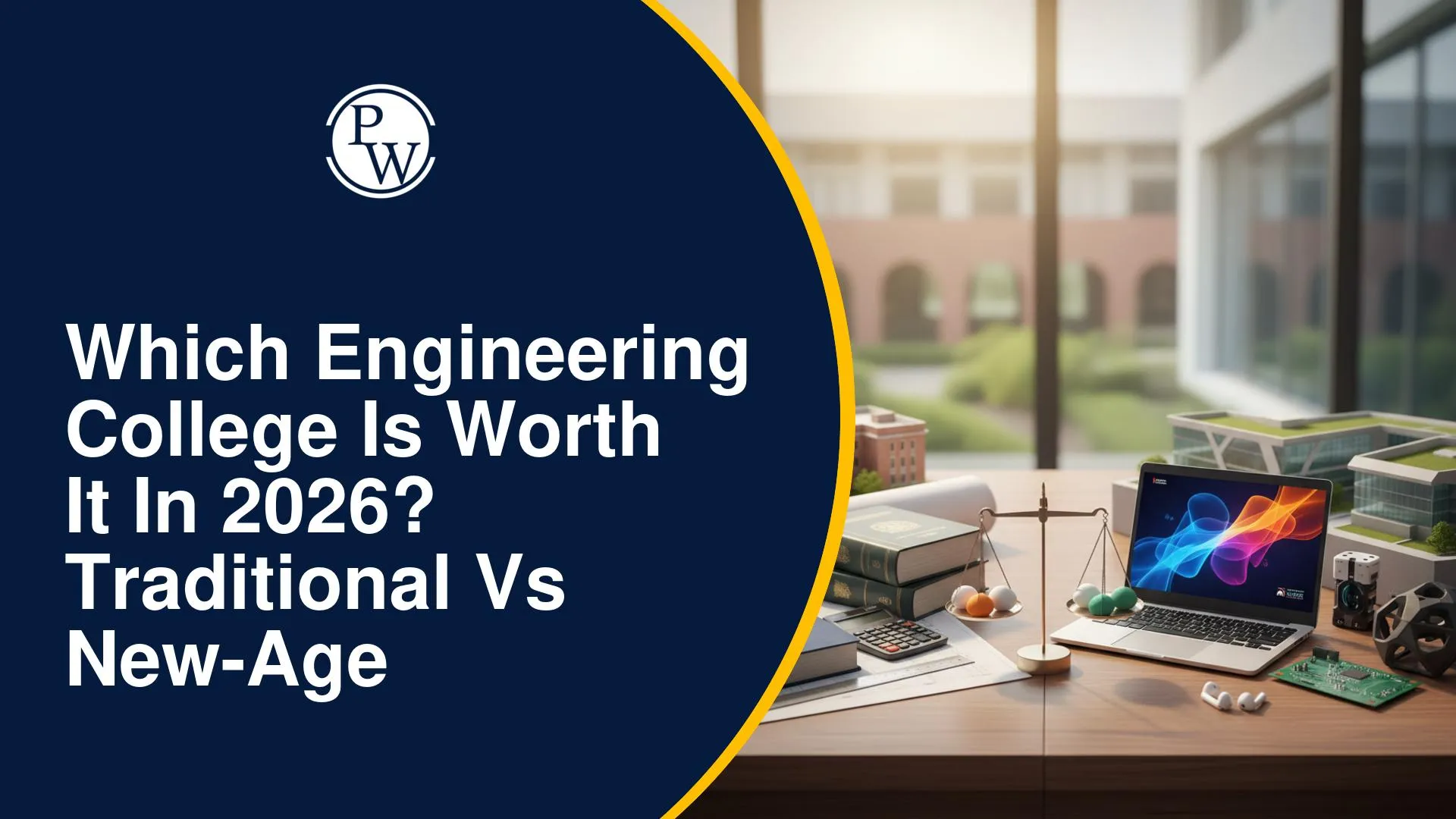
Traditional vs New-Age: Which Engineering College Is Worth It in 2026? Traditional vs New-Age
 Hardik Gupta2 Nov, 2026
Choosing the right path after school is an important step. Students often ask: Which Engineering College Is Worth It in 2026? Traditional vs New-Age models offer very different learning tracks. The rise of AI and automation makes this choice critical.
Today, learners must evaluate real curriculum relevance, practical exposure, and career preparation. This article compares traditional campuses, modern institutes, and industry-led models like PW IOI to help you decide.
Offerings of Traditional Engineering Colleges
Traditional engineering colleges rely on established university curriculam. They build strong foundations in core subjects through classroom teaching and theoretical evaluation.
These institutions suit students seeking long-standing institutional prestige and large alumni bases.
Traditional College Features
Traditional engineering colleges maintain established academic systems and university-approved course structures.
|
Feature Area |
Details
|
|---|---|
|
Curriculum |
University-designed theoretical framework |
|
Learning Style |
Classroom lectures and laboratory sessions |
|
Campus Network |
Large and established alumni communities |
|
Campus Culture |
Active societies, clubs, and cultural fests |
Learning Approach of New-Age Engineering Colleges
New-age engineering colleges focus directly on changing industry requirements. They update coursework rapidly to include emerging tools like artificial intelligence and automation.
These colleges emphasize practical learning in engineering, project work, and modern technical skills over pure theory.
New-Age College Features
New-age engineering education prioritizes industry readiness, active coding, and problem-solving.
|
Feature Area |
Details
|
|---|---|
|
Modern Subjects |
Integrated AI, data, and cloud courses |
|
Practical Focus |
Hands-on project-based engineering learning |
|
Skill Building |
Teamwork, communication, and real problem-solving |
|
Flexibility |
Adaptable syllabus aligned with tech changes |
Unique Focus of PW IOI
PW Institute of Innovation (PW IOI) provides an industry-focused model. It prepares students for both corporate employment and entrepreneurial journeys.
PW IOI bridges the gap between academic theory and practical execution. It offers real industry exposure and guidance from experienced practitioners.
PW IOI Model Benefits
PW IOI combines strong engineering fundamentals with direct real-world application.
|
Feature Area |
Details
|
|---|---|
|
Industry Exposure |
Live real-world projects and direct mentorship |
|
Career Tracks |
Tailored paths for employment and startups |
|
Future Skills |
Applied AI tools, analytical thinking, and leadership |
|
Hands-on Labs |
Dedicated work environments for rapid prototyping |
Traditional vs New-Age vs PW IOI: Quick Comparison
Comparing these learning environments clarifies which setting fits your individual goals.
|
Preparation Area |
Traditional Colleges |
New-Age Colleges |
PW IOI
|
|---|---|---|---|
|
Core Curriculum |
Theoretical and structured |
Updated and industry-aligned |
Industry-focused and adaptable |
|
Practical Projects |
Standard laboratory tasks |
Applied technical projects |
Production-level real-world builds |
|
Emerging Tech |
Elective or self-taught |
Integrated into main coursework |
Daily application of AI and tools |
|
Mentorship |
Academic faculty advisors |
Industry guest lecturers |
Active practitioners and mentors |
|
Career Focus |
Standard placement drives |
Modern role preparation |
Employability and startup tracks |
Which Engineering College Is Worth It in 2026? Traditional vs New-Age Selection
Choosing the right college depends on your career focus, preferred study style, and technical interests.
Choose Traditional Colleges If:
-
You prioritize established brand heritage and vast alumni networks.
-
You prefer structured, theory-first university education.
-
You want a classic campus life with traditional societies.
Consider New-Age Colleges If:
-
You want quick access to modern technology coursework.
-
You prefer practical assignments over written exams.
-
You seek dynamic learning environments with flexible study options.
Consider PW IOI If:
-
You want intensive practical learning in engineering with live mentorship.
-
You aim to build real products, explore entrepreneurship, or enter high-growth tech roles.
-
You need future-ready engineering skills and hands-on portfolio experience.
Decision Framework for 2026 Admissions
Evaluate what you actually need from an engineering degree before enrolling.
-
Check the syllabus: Does the college teach modern industry frameworks?
-
Review hands-on training: Will you build original projects or just complete lab manuals?
-
Assess the mentors: Do teachers have real experience building software or hardware?
-
Compare long-term value: Look beyond initial placement packages to lifelong skill readiness.
FAQ
What distinguishes new-age engineering colleges from traditional ones?
Is PW IOI a new-age engineering college?
Are traditional engineering colleges still relevant in 2026?
Does a degree alone guarantee a technical career today?
What core skills do recruiters prioritize in engineering graduates?