

JEE Mains 2027: Explore Industry-Integrated B.Tech at PW IOI After Your Exam
 Neha Tanna16 Jul, 2026
JEE Mains 2027 will be a crucial step if you are aiming for a career in engineering. While your preparation focuses on mastering the JEE Mains 2027 syllabus, practising questions, and improving your performance, planning your next step after the exam is equally important.
Understanding the exam updates, registration process, results, counselling options, and B.Tech opportunities helps you make informed decisions. Beyond securing admission, you should choose a program that helps you develop practical skills and industry exposure. PW IOI’s Industry-Integrated B.Tech programs combine academic learning with projects, mentorship, and career-focused training to help you build job-ready skills.
JEE Mains 2027: Important Updates
JEE Main 2027 is an important engineering entrance exam for you if you are targeting admission to IITs, NITs, IIITs, and other top institutes. Get all the latest updates on JEE Main 2027, including exam dates, registration details, eligibility criteria, exam pattern, syllabus, and other key information.
|
JEE Main 2027 Event / Topic |
Expected Date / Details |
|
JEE Main 2027 Session 2 Registration |
January – February 2027 |
|
JEE Main 2027 Session 2 Exam Date |
First week of April 2027 |
|
JEE Main 2027 Session 2 Result |
Late April 2027 |
|
JEE Main 2027 Scorecard |
Released separately for both sessions on the official NTA JEE Main portal. |
|
JEE Main 2027 Percentile Calculation |
NTA calculates and releases subject-wise and overall NTA scores along with the All India Rank (AIR). |
|
JEE Main 2027 Best of Two Sessions |
If appear for both sessions, the best score is considered for the final JEE Main 2027 result and ranking. |
|
JEE Main 2027 Counselling Authority |
Joint Seat Allocation Authority (JoSAA) manages the centralised counselling process. |
|
JEE Main 2027 Counselling Process |
Registration, choice filling, and seat allotment are conducted online through the JoSAA portal. |
|
JEE Main 2027 Counselling Timeline |
Expected to begin in June 2027 after the declaration of JEE Advanced 2027 results. |
What Should You Do After JEE Mains 2027?
After completing JEE Main 2027, you should focus on making an informed career decision instead of choosing a college only based on rankings.
Your next steps should include:
-
Downloading your JEE Main scorecard.
-
Checking your percentile and All India Rank.
-
Understanding your counselling options.
-
Comparing colleges, branches, and courses.
-
Exploring different B.Tech admission opportunities.
-
Evaluating programs based on curriculum, internships, and career support.
Your engineering college choice can influence your future opportunities, so you should look for a program that helps you develop both technical knowledge and practical skills.
Engineering Admission Options After JEE Main 2027
After your JEE Main result, you can explore multiple engineering pathways.
IIT Admissions
If you aim for IITs, you need to qualify for JEE Advanced after meeting the required eligibility criteria.
NIT Admissions
You can apply for NIT admissions through JoSAA counselling based on your JEE Main rank.
IIIT Admissions
IIITs offer technology-focused programs, especially in areas like Computer Science, Artificial Intelligence, and Electronics.
GFTIs and State Counselling
You can also explore government-funded technical institutes and state-level counselling opportunities.
Industry-Integrated B.Tech Programs
Apart from traditional options, you can explore industry-integrated B.Tech programs that combine academic learning with practical exposure, projects, and career-oriented training.
Why Industry-Integrated B.Tech Programs Are Becoming Popular
The engineering industry is changing quickly. Today, companies prefer professionals who can apply concepts, build solutions, and work on practical challenges.
Traditional engineering programs provide strong academic foundations, but industry-integrated programs focus on reducing the gap between classroom learning and industry requirements.
With an industry-integrated B.Tech program, you can gain:
-
Industry-relevant knowledge.
-
Practical technical skills.
-
Experience through live projects.
-
Internship exposure.
-
Career-focused learning.
-
Better preparation for professional roles.
This approach helps you enter the industry with more confidence and practical understanding.
Explore Industry-Integrated B.Tech Programs at PW IOI
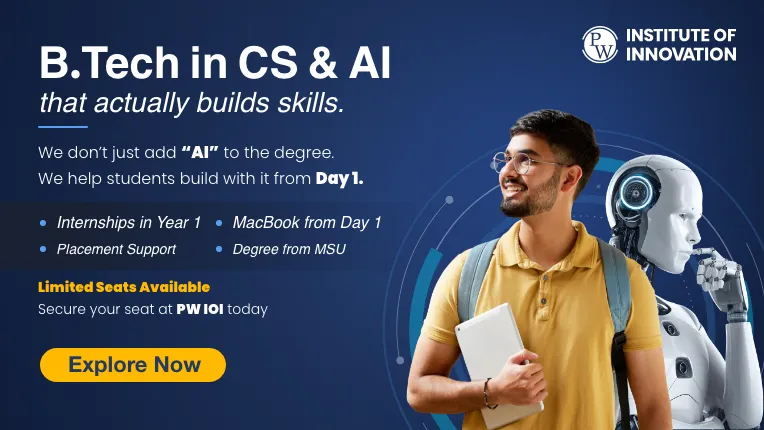
If you are exploring B.Tech options after JEE Main 2027, PW IOI’s Industry-Integrated B.Tech programs can be an option you evaluate based on your career goals.
PW IOI focuses on helping you combine engineering fundamentals with practical skills through:
Industry-Relevant Curriculum
You learn concepts aligned with current technology trends and industry requirements. The curriculum focuses on preparing you for modern engineering careers.
Project-Based Learning
Instead of only studying theoretical concepts, you get opportunities to apply your knowledge through practical projects and problem-solving activities.
AI and Emerging Technology Focus
Technology careers are evolving rapidly. By learning areas like Artificial Intelligence, programming, and emerging technologies, you can prepare yourself for future opportunities.
Internship and Career Support
You get exposure to practical learning experiences, mentorship, and career guidance that help you understand professional expectations.
Industry Mentorship
Guidance from experienced mentors helps you improve technical skills, understand real-world applications, and work towards your career goals.
Through PW IOI’s Industry-Integrated B.Tech programs, you can experience a learning environment that combines academics, projects, and career preparation.
Traditional B.Tech vs Industry-Integrated B.Tech
Traditional B.Tech focuses on academic concepts and theoretical foundations, while Industry-Integrated B.Tech combines classroom learning with practical industry exposure. It helps you gain real-world skills, hands-on experience, and a better understanding of workplace requirements through industry collaborations and projects.
|
Traditional B.Tech |
Industry-Integrated B.Tech |
|
Focuses more on academic concepts |
Combines academics with practical learning |
|
Limited industry interaction |
More industry exposure |
|
Standard academic projects |
Real-world projects |
|
Internship may be separate |
Internship-focused learning approach |
|
Mainly exam-focused evaluation |
Skill and application-based learning |
Your choice should depend on your learning goals, career plans, and the type of experience you want during your engineering journey.
Common Mistakes You Should Avoid After JEE Main
After your exam, you should avoid making admission decisions without proper research.
Common mistakes include:
-
Choosing a college only because of rankings.
-
Ignoring curriculum quality.
-
Not checking internship opportunities.
-
Overlooking placement support.
-
Missing counselling deadlines.
-
Not exploring alternative admission options.
A careful evaluation helps you choose a program that supports your long-term career goals.
Documents Required for Engineering Admission
You should keep these documents ready during the admission process:
-
JEE Main Scorecard
-
JEE Main Admit Card
-
Class 10 Certificate
-
Class 12 Marksheet
-
Aadhaar Card
-
Passport-size photographs
-
Category Certificate (if applicable)
Keeping your documents prepared helps you complete admission procedures smoothly. Your JEE Main 2027 journey does not end after the exam. Choosing the right engineering program is an important decision.
Instead of focusing only on getting admission, you should consider programs that help you develop practical skills, gain industry exposure, and prepare for professional opportunities. Industry-integrated B.Tech programs like PW IOI can help you combine academic learning with projects, mentorship, and career-focused training.
FAQs on Industry-Integrated B.Tech Programs
What should you consider after completing JEE Main 2027?
What is an Industry-Integrated B.Tech program?
How does an Industry-Integrated B.Tech program help students?