

Active Startups Founded by PW IOI Students: The Next Generation of Indian Founders
 Aarti .13 Jul, 2026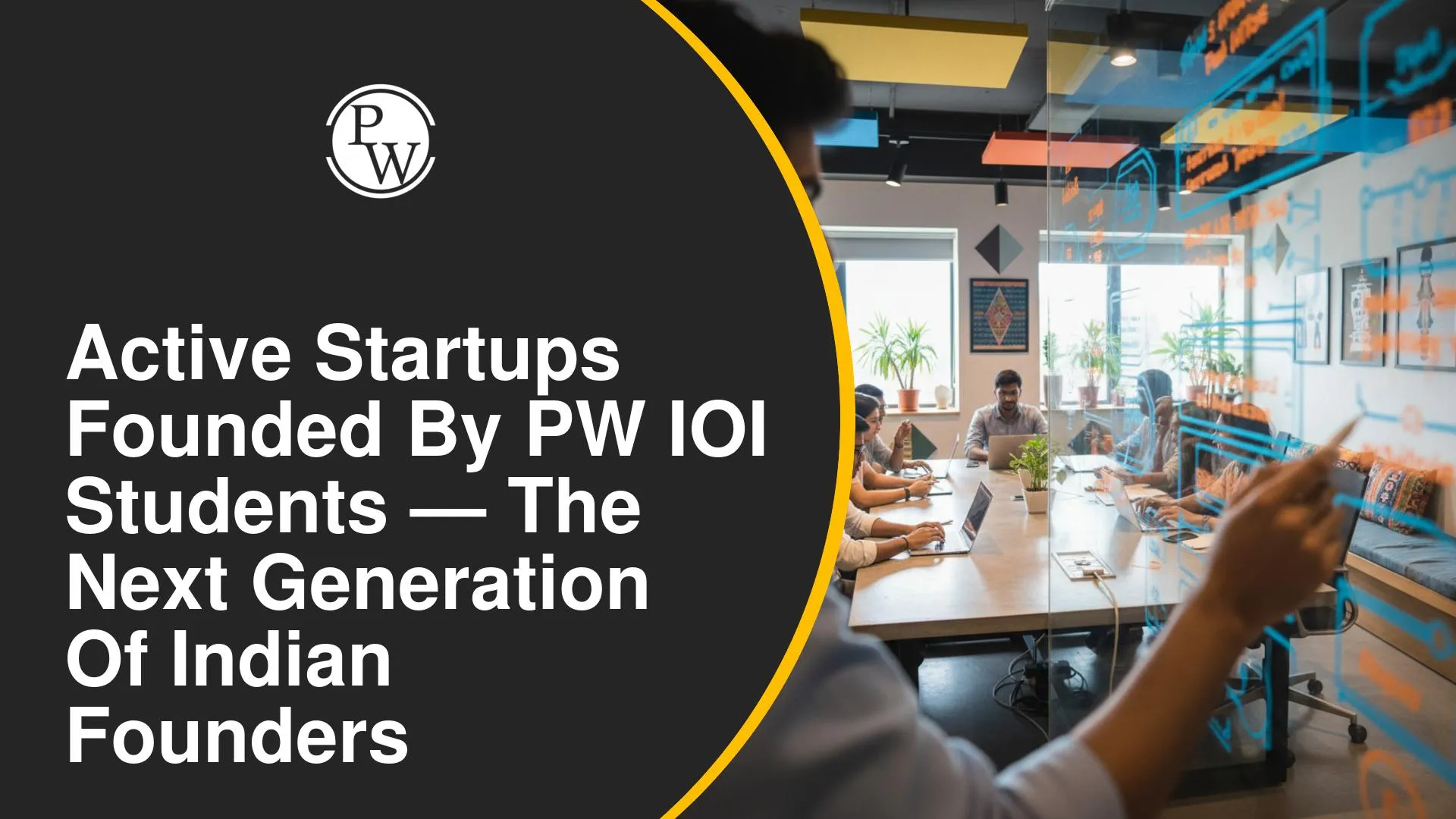
Starting a company while you're still in college may seem like a big challenge. You may have ideas but wonder where to begin, how to build a product, or whether you need years of experience before launching a startup. The journey usually begins with a simple problem and grows through constant learning, testing, and improvement.
At PW Institute of Innovation (PW IOI), students are turning this approach into reality by building startups across AI, SaaS, fashion, creator ecosystems, and digital platforms. These ventures focus on solving real problems, building useful products, and improving them based on user feedback.
Their journeys show that entrepreneurship is less about waiting for the perfect moment and more about starting small, learning fast, and improving consistently.
Can You Build a Startup While in College?
Yes. College gives you the time and flexibility to experiment, test ideas, and learn from mistakes before taking on larger responsibilities. Instead of waiting until graduation, you can start by identifying a real problem, building a simple solution, and improving it as you learn.
Many successful startups don't begin with a perfect business plan. They begin with a question:
-
What problem can you solve?
-
Who faces this problem?
-
Can technology make the solution better?
Once you have an answer, you can build a basic version of your product, gather feedback, and continue improving it over time.
This approach also helps you develop practical skills such as product development, problem-solving, teamwork, and communication while working on something that has real value.
The startups featured below show how PW IOI students turned ideas into products that serve different industries and user communities.
Top Student Startups at PW IOI
The startups built by PW IOI students cover a wide range of industries. While each one solves a different problem, they all begin with the same goal—creating products that make everyday tasks simpler, faster, or more accessible.
ManuDocs — Simplifying Trade Documentation
Founder: Sumit Singh
Managing export and import documentation can be time-consuming, with businesses often handling multiple forms, compliance requirements, and repetitive paperwork.
To simplify this process, Sumit Singh founded ManuDocs, a trade documentation and automation startup.
The platform helps businesses manage export-import documents more efficiently by reducing manual work and improving documentation workflows. By focusing on automation, ManuDocs aims to make global trade operations smoother for businesses that deal with international shipments.
This startup highlights how technology can simplify business processes and solve operational challenges for companies.
Pipeup — A Community for Student Creators
Founders: Nimish Agarwal, Krishan, and Adarsh
Building a career as a content creator often involves more than creating videos or posts. Finding brand collaborations, learning from experienced creators, and discovering new opportunities can be equally challenging.
To address this, Pipeup was created as a free community for student creators in India.
The platform allows creators to:
-
Connect with other creators
-
Discover brand collaboration opportunities
-
Learn from shared experiences
-
Access new opportunities early
-
Contribute ideas that help improve the platform
Instead of focusing only on networking, Pipeup encourages creators to grow together by sharing knowledge and supporting one another.
Apex Fashion Labs — Helping Founders Build Fashion Brands
Founder: Nithish Sheshagiri
Launching a fashion brand involves much more than designing products. New founders also need guidance on branding, operations, marketing, and business growth.
To support aspiring entrepreneurs, Nithish Sheshagiri founded Apex Fashion Labs.
The platform helps people build and grow their own fashion brands by providing guidance, practical systems, and industry support throughout the journey.
Rather than selling fashion products directly, Apex Fashion Labs focuses on helping new founders turn their business ideas into successful fashion brands.
This startup shows how entrepreneurship can also be about enabling other entrepreneurs to succeed.
Akshmala — Making Spiritual Access Easier
Founders: Mayank Ranjan and Pulkit Vyas
Finding authentic spiritual information and devotional services online can sometimes be difficult because information is spread across multiple sources.
To make this experience simpler, Mayank Ranjan and Pulkit Vyas built Akshmala.
The startup focuses on providing a trusted digital platform where users can easily access authentic spiritual information and devotional services.
By combining technology with accessibility, Akshmala aims to make spiritual resources easier for users to discover and use.
What Can You Learn From These Student Founders?
Every founder's journey is different, but there are several common lessons you can apply if you want to build your own startup.
Start With a Real Problem
The strongest startup ideas usually come from solving genuine challenges.
For example, ManuDocs focuses on simplifying trade documentation, while Pipeup helps student creators connect with opportunities and brands.
Build the First Version Early
You don't need a perfect product before launching. Building a simple version allows you to gather feedback, identify improvements, and understand what users actually need.
Keep Improving
Successful products continue evolving after launch. As users provide feedback, founders add features, improve the experience, and make the product more useful over time.
Learn by Building
Reading about entrepreneurship is helpful, but building a product teaches you far more. Every challenge—whether technical, operational, or user-related—helps you develop practical experience that can't be gained from theory alone.
Don't Wait Until Graduation
You don't have to wait until you complete your degree before starting. With a clear problem, consistent effort, and a willingness to learn, you can begin building products while you're still in college.
Active Startups Founded by PW IOI Students FAQ
Can you start a startup while you're still in college?
Do you need funding before launching a startup?
Can one person build a startup?
What industries do PW IOI student startups work in?
How do student startups usually begin?